By Roxanna Thomas
Growing up, I was surrounded by chaos. In my home. Outside my home, with extended family and friends. That chaos taught me quickly how to read a room. How to read the people around me. I learned to conceptualize and rationalize their behavior. My brain did not want to believe that people I loved could behave in such ugly ways. So I found explanations, because explanations made chaos feel safer. If I could understand why someone behaved in a shitty way, maybe I could predict it. If I could predict it, maybe I could avoid it. Understanding became its own kind of protection.
I became so good at understanding everyone’s behavior that sometimes I used that understanding to talk myself out of my own feelings. Context can definitely explain behavior without excusing it. That was something I had to learn along the way.
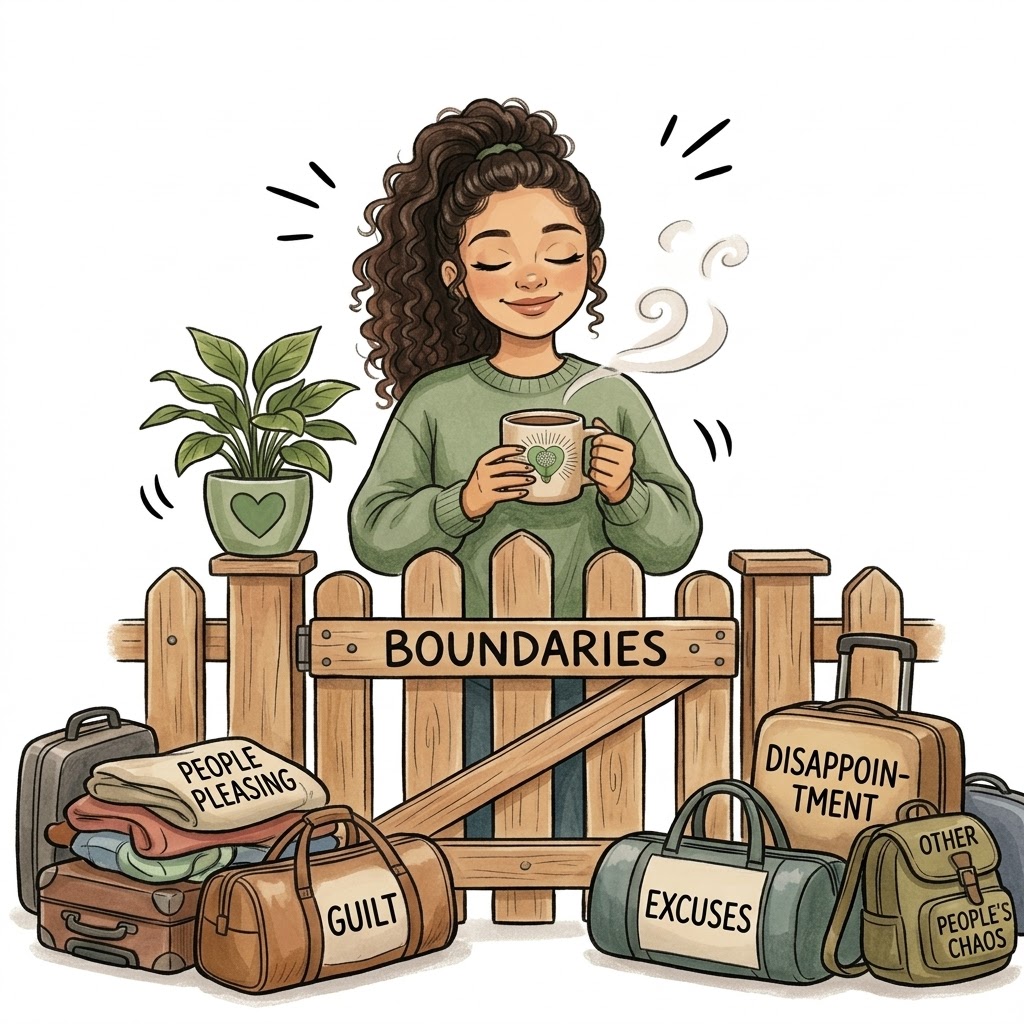
It turned into a space where I minimized things because I could explain them. I stayed quiet because I didn’t want someone else to feel bad. I became a people pleaser. I confused being “the bigger person” with having zero needs. Putting boundaries in place felt like I was lacking compassion. That guilt bullshit took over.
For me, these were things passed down to me. Things I saw play out in my home, so I thought they were normal. Not the understanding part, but the justification and letting things slide because that felt safer than boundaries. The people-pleasing.
When I believed understanding someone meant I had to tolerate them, I was trying to be the perfect Catholic daughter. The rule follower who kept the peace and didn’t rock the boat. The girl who believed connection came at my own expense.
Empathy without boundaries eventually became empathy for everyone except me.
When I became a mother, everything came into focus. I knew I didn’t want my kids growing up believing the things I had learned to normalize. Their emotional safety outweighed my wild need to keep everyone else comfortable. Boundaries started to mean safety, not just for me, but for the family I created. When I stopped trying to rescue, fix, and explain, I finally started prioritizing my own needs and my own healing. I realized that understanding someone’s pain didn’t mean carrying it for them. I can have empathy for the why behind someone’s choices without volunteering to absorb the consequences.
If keeping someone else comfortable put my kids’ safety or the peace of our home at risk, I couldn’t give an eff about their discomfort. I learned to be okay with people being disappointed in me, angry, or unhappy. It’s amazing how much I can tolerate when I know I’m protecting the peace of my family.
That shift also changed how I sit with my clients. I help them recognize that compassion and accountability can exist in the same room. My goal is not to turn the person who hurt them into a villain in order to validate their hurt. We can understand someone’s history, trauma, intentions, and limitations and still tell the truth about the impact of their shitty behavior. Sometimes healing lives in learning how to hold both.
Healthy relationships aren’t: “You hurt me, therefore you’re a terrible person.”
They also aren’t: “I understand why you hurt me, therefore it’s cool.”
I would say they are closer to: “I understand there are reasons why you behaved the way you did. I care about you. We still need to talk about what happened.”
Accountability delivered with empathy is very different from punishment. This rings true in marriage, parenting, friendship, family, and even ourselves. The reality is that both things can be true. We can have empathy, show kindness, and be understanding, without sacrificing ourselves.
Maybe that is what healthy empathy actually is.
I can understand how you became who you are.
I can have compassion for the things you’ve experienced and what happened to you.
I can hope that you heal.
And I can still decide that what happens next will not be at my expense or the expense of those I love.
Roxanna Thomas, MS, LPCC, is a therapist at The Uncommon Heart. She works with people who are tired of feeling stuck in the same painful patterns, especially those who show up for everyone else while feeling disconnected from themselves. She helps clients uncover what keeps them stuck, heal the stress, shame, and past experiences weighing on them, and build the boundaries and tools to move forward. Roxanna blends evidence-based practices with practical, real-life strategies, and works with anxiety, self-doubt, guilt, life transitions, and cross-cultural challenges. Her approach is holistic and solution-focused, and she creates a warm, non-judgmental space where clients can reconnect with themselves, regulate their emotions, and develop self-trust. She welcomes people of all backgrounds and identities, and helps them move from surviving to truly living.
Thank you for being part of this with us.
Want reflections like this in your inbox? Join our mailing list
Follow along on Instagram and Facebook